
Discovering Europe’s Creative Neighbourhoods Beyond Tourist Centres
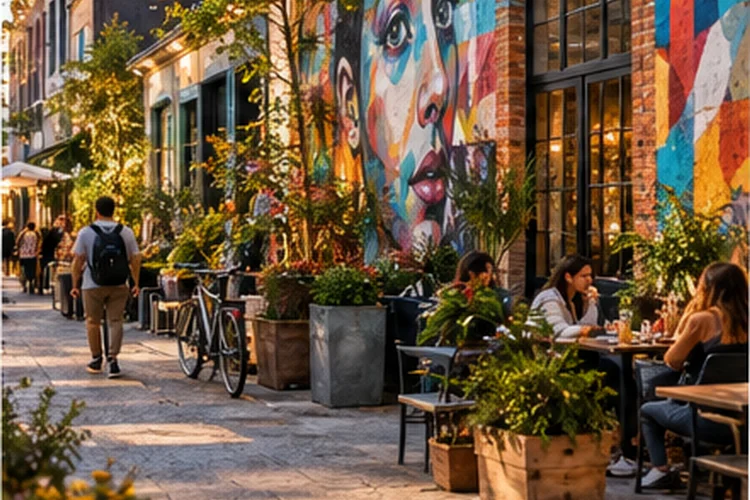
Europe’s most famous city centres are famous for a reason. Paris has the Louvre, Barcelona has the Gothic Quarter, Prague has its Old Town, and Copenhagen has Nyhavn. But spend your entire trip around headline attractions and you can miss another side of European cities completely.
A few metro stops away, former industrial districts, working-class neighbourhoods, and residential streets are often home to independent galleries, experimental restaurants, vintage shops, street art, music venues, and studios where local creative communities actually work.
Discovering Europe’s creative neighbourhoods beyond tourist centres is not about finding places that nobody knows. It is about looking beyond the streets designed around short tourist visits and spending more time in areas shaped by everyday city life.
Places such as Nørrebro in Copenhagen, Kallio in Helsinki, Poblenou in Barcelona, Žižkov in Prague, and Marvila in Lisbon each tell a different story.
Instead of racing through them, slow down. Walk, eat locally, visit small cultural spaces, and notice how old buildings are being reused by new generations.
Why Creative Neighbourhoods Feel Different From Tourist Centres
Historic centres often concentrate a city’s most important monuments, but creative districts tend to reveal how the city is changing now.
Many developed from former industrial or working-class areas where relatively affordable spaces attracted artists, independent businesses, musicians, designers, and younger residents. Warehouses became studios, old shops became cafés, and blank walls became outdoor galleries.
The result is rarely polished in the same way as a central tourist district.
That is part of the appeal.
You might find a ceramics workshop next to an old mechanic, an experimental theatre hidden inside a former factory, or a tiny wine bar occupying a building that still shows traces of its industrial past.
These neigbourhoods are also real residential communities, however. The best way to experience them is with curiosity rather than treating every street as a tourist attraction.
Nørrebro: Copenhagen Beyond the Postcard Waterfront
Cross Copenhagen’s lakes from the historic centre and the atmosphere begins to change.
Nørrebro is described by Visit Copenhagen as the city’s most culturally diverse neighbourhood, with independent shops, international food, creative spaces, and a strong street culture.
Streets such as Jægersborggade, Elmegade, and Blågårdsgade are especially good for wandering without a strict itinerary.
This is a good place to experience Copenhagen beyond minimalist design showrooms and famous waterfront views.
You might begin with coffee, browse vintage clothing or locally made ceramics, and then walk toward Superkilen or Assistens Cemetery. Food is a major part of the neighbourhood’s identity too, reflecting its multicultural population rather than a single idea of Danish cuisine.
The trick is to avoid trying to “complete” Nørrebro.
Give yourself half a day and simply follow interesting side streets. The mix of independent businesses and ordinary residential life is more interesting than any checklist.
Kallio: Helsinki’s Relaxed Cultural Side
Helsinki’s Kallio has undergone a similar transformation.
Once strongly associated with its working-class history, the neighbourhood is now known for small boutiques, bars, cafés, restaurants, subculture venues, and a relaxed creative scene. MyHelsinki describes it as a cultural heart of the city with a strong communal character.
Kallio is particularly good for travelers who enjoy observing everyday urban rhythms.
Walk along Hämeentie, look for vintage stores, stop at an independent café, then move through residential streets and local parks rather than searching only for attractions.
In summer 2026, parts of Kallio are also being used as pedestrian-friendly “summer streets,” with more space for community activities and public events.
That captures what makes the district interesting. Its identity is not created by one museum or landmark but by the way residents actually use the streets.
Poblenou: Barcelona’s Industrial Past Meets Design Culture
Barcelona’s Poblenou feels very different from Las Ramblas or the Gothic Quarter.
The area was once one of the major centres of Catalonia’s industrial growth, filled with textile factories and workshops.
Tourism of Barcelona notes that old industrial buildings have since been adapted for new economic activity, design studios, housing, and other creative uses through the broader transformation of the district.
That industrial history remains visible.
Brick factories, chimneys, warehouses, modern technology offices, cafés, art spaces, and residential streets now sit next to one another. The contrast gives Poblenou much of its character.
Street art adds another layer. Barcelona’s official tourism material highlights murals in the neighbourhood and its connection with illustration and creative industries.
Do not spend the entire visit hunting murals, though.
Walk the Rambla del Poblenou, explore the older streets around Plaça de Prim, and allow time to see how the area’s industrial architecture interacts with normal neighbourhood life.
That combination makes the experiance more interesting than simply photographing the most colorful wall.
Žižkov: Prague’s Bohemian Side Beyond the Old Town
Prague’s historic centre can become intensely busy, particularly around the astronomical clock, Charles Bridge, and castle routes.
Head east and Žižkov presents a rougher, more residential version of the city.
Prague City Tourism describes Žižkov as one of the city’s iconic neighbourhoods outside the historic centre, shaped by a working-class past, pubs, cabarets, artists, and its hilly setting beneath Vítkov Hill.
Today, the district is changing, but traces of that bohemian identity remain.
Walk through lower Žižkov and you will encounter 19th- and 20th-century buildings, local squares, pubs, cultural venues, and streets that feel dramatically different from central Prague’s polished medieval environment.
Prague City Tourism even provides dedicated walking routes through the area.
Žižkov is a good reminder that creative neighbourhoods do not need to look fashionable.
Sometimes their appeal comes from architectural irregularity, older local businesses, inexpensive cultural spaces, and decades of urban history existing side by side.
Marvila: Lisbon’s Warehouses Turn Toward Art
Lisbon’s eastern districts offer another example of creativity emerging from industrial landscapes.
Marvila and nearby areas developed around factories and workers’ housing during Lisbon’s industrial expansion. As industrial activity declined, warehouses and other spaces gradually began attracting galleries, restaurants, cafés, artist projects, and cultural organizations.
Visit Lisboa describes how Rua do Açúcar became part of this transformation, with cafés, craft-beer spaces, galleries, and creative businesses appearing among the area’s industrial architecture.
Urban art is another visible part of Marvila.
Official Lisbon tourism routes identify several works around the district, while the 2026 Poster Mostra turns Marvila streets into an open-air exhibition featuring posters and illustrations by established and emerging artists.
Marvila feels more spread out than Lisbon’s compact historic centre, so allow extra walking time.
The gaps between cultural spaces are part of the experiance: old warehouses, residential blocks, railway infrastructure, and newer creative businesses reveal the area’s ongoing transformation.
Look for Working Culture, Not Just Photogenic Culture
The easiest mistake when visiting a creative district is focusing only on what photographs well.
A giant mural is immediately visible. A community theatre rehearsal, small publishing shop, independent record store, or neighborhood market may reveal much more.
Check local event calendars before visiting.
Look for open studios, small exhibitions, flea markets, live music, workshops, film screenings, and community festivals. These events often reveal how creative spaces actually function rather than presenting creativity as decoration.
Also spend money thoughtfully.
Buy coffee from independent cafés, purchase something directly from a maker, eat at local restaurants, or pay admission to smaller cultural venues when appropriate.
You do not need to avoid popular establishments just because they have become well known. The goal is simply to spread your attention beyond whatever happens to rank first on social media.
Explore Slowly and Respect Residential Life
Creative neighbourhoods can become victims of their own popularity.
A street becomes fashionable, visitors arrive, rents rise, and businesses change. Eventually, the atmosphere travelers originally wanted to experience may begin disappearing.
You cannot solve urban gentrification during a weekend trip, but you can travel more thoughtfully.
Remember that apartment buildings are people’s homes. Keep noise reasonable, especially at night. Avoid blocking doors or photographing residents as though they were scenery.
Walk instead of jumping between “must-see” locations whenever possible.
Sit in a neighborhood park. Visit the bakery locals use. Spend an hour in a bookstore. Take public transport a few stops farther than you originally planned.
Some of the best discoveries happen when there is no famous attraction at the end of the street.
Discovering Europe’s creative neighbourhoods beyond tourist centres offers a more layered way to experience familiar cities.
Nørrebro brings multicultural street life into Copenhagen. Kallio reveals Helsinki’s independent and communal side.
Poblenou combines Barcelona’s industrial heritage with contemporary design, while Žižkov offers a bohemian alternative to central Prague. In Lisbon, Marvila shows how industrial spaces can become platforms for art and cultural experimentation.
You do not need to abandon famous landmarks to enjoy these areas.
Simply leave enough room in your itinerary to explore beyond them.
On your next European city break, choose one neighbourhood outside the historic centre and give it half a day with no rigid schedule. Walk, eat, browse, listen, and observe. You may discover that the most memorable part of the city is the part you almost skipped.