
How to Plan Multi-Country European Journeys Using Regional Rail
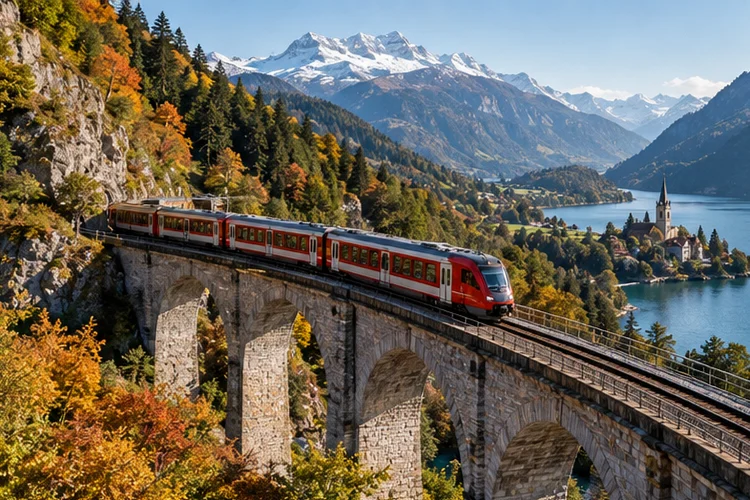
Flying between European capitals can save time, but it often skips everything between them. Regional rail gives you a different experience: smaller towns, border regions, mountain valleys, local stations, and the gradual change from one language and landscape to another.
The challenge is that Europe’s railway network is not one single system. Every country has its own operators, ticketing rules, train categories, and reservation policies. A route that looks simple on a map might involve three railway companies and two different booking platforms.
Learning how to plan multi-country European journeys using regional rail is therefore less about memorizing timetables and more about understanding how the network fits together.
Regional trains can be particularly useful for travelers who value flexibility. Many services do not require compulsory reservations, while high-speed and overnight trains are more likely to need them.
Eurail’s 2026 reservation map specifically notes that reservation-free alternatives often run along corridors where high-speed trains require bookings.
With a little planning, the slower route can become part of the trip rather than simply transportation between attractions.
Build Your Route Around Geography, Not Country Count
A common mistake is trying to visit as many countries as possible.
“Seven countries in ten days” sounds impressive until half the holiday is spent carrying luggage through railway stations.
Regional rail works better when your destinations form a logical geographical corridor.
For example, a Central European trip could connect Prague, Vienna, Bratislava, and Budapest. Another journey might move from Belgium through Luxembourg into western Germany and then toward France or Switzerland.
You can still cross several borders, but each move should make geographical sense.
Try to keep most travel days reasonably short. Three or four hours of rail travel can still leave plenty of time for exploring after arrival. Seven-hour journeys every second day eventually turn the holiday into a railway endurance test.
Also look beyond capital cities. Regional services often make places such as university towns, wine regions, Alpine communities, and smaller historic cities surprisingly accessible.
The journey becomes much more interesing when the train is connecting experiences rather than just major airports without wings.
Understand the Difference Between Regional and High-Speed Trains
European rail terminology changes from country to country.
Germany uses categories such as Regionalbahn and Regional-Express. France has TER services. Italy operates Regionale trains, while Switzerland has a dense mix of regional, interregional, and long-distance services.
Regional trains generally make more stops and cover shorter distances than high-speed services.
That sounds like a disadvantage, but it creates flexibility.
Regional services are often easier to use spontaneously because many do not have compulsory seat reservations.
High-speed trains such as TGV, Eurostar, Frecciarossa, AVE, and several other premium services commonly require reservations when traveling with an Interrail or Eurail pass.
You do not have to avoid high-speed trains completely.
A smart itinerary can combine both.
Use regional rail for scenic or shorter journeys where flexibility matters, then use a fast intercity connection when spending eight hours changing trains would add little to the experience.
The point is not travelling slowly for the sake of it. It is choosing the train that makes sense for each section.
Compare Rail Passes With Point-to-Point Tickets
A rail pass looks like the obvious choice for a multi-country trip, but it is not automatically the cheapest option.
Eurail is designed for travelers who live outside Europe, while European residents generally use Interrail. Flexible passes allow unlimited eligible train travel during selected travel days within a larger validity period.
The advantage is convenience.
If you decide to leave Vienna two hours earlier or stop somewhere unexpectedly, a pass can make the change much easier than managing a collection of restrictive advance tickets.
However, reservations can still cost extra.
That becomes important if your itinerary relies heavily on reservation-required high-speed services.
Point-to-point tickets may work better when your itinerary is fixed and consists mainly of inexpensive regional journeys. Italy, for example, sells dedicated regional tickets, including journeys crossing between Italian regions.
Before buying anything, price the entire itinerary both ways.
Compare the pass price plus expected reservation fees against individual tickets. The answer may be different for a 10-day trip through four countries than for a month-long journey with frequent spontaneous stops.
Treat Seat Reservations as a Separate Planning Layer
Owning a rail pass does not always mean you can simply walk onto every train.
This catches many first-time rail travelers.
According to the 2026 Interrail guidance, reservations are compulsory on many high-speed trains, sleeping accommodation on night trains, and some panoramic railway services.
Regional trains are usually much simpler, but always check the specific service rather than assuming.
Switzerland illustrates the difference well. Seat reservations are possible on many InterCity trains but are generally not compulsory domestically, while international services may follow the rules of another country or operator. TGV services to France, for example, require reservations.
This is why your itinerary should have two layers:
First, decide where you want to travel.
Then check which individual trains require bookings.
Do this early for summer travel, popular international services, and night trains. Regional connections can often remain flexible while the handful of reservation-heavy legs are locked in advance.
That combination gives you structure without turning the entire holiday into a rigid schedual.
Leave Realistic Buffers Between Connections
European journey planners sometimes display impressively tight connections.
Seven minutes in an unfamiliar station may technically be possible.
That does not mean it is enjoyable.
For regional itineraries, particularly those crossing borders, build some breathing room into important connections. A minor delay on your first train can otherwise create a stressful race through a large station.
Buffers matter even more when tickets have been purchased separately.
Under current EU passenger-rights rules, missed-connection protections are strongest when the journey is covered by a through-ticket. Travelers using separate individual tickets may not receive the same protections, although some railway agreements provide additional assistance.
So when booking a complex travel day, check whether the journey is being sold as one through-ticket or as several seperate transport contracts.
For an ordinary connection between frequent regional trains, 15-30 minutes may be perfectly comfortable. For a critical international connection, especially the last train of the evening, giving yourself substantially more time can be worthwhile.
A station café is usually more enjoyable than an unexpected hotel caused by a missed final departure.
Use Regional Rail to Create Better Stopovers
One of the biggest benefits of regional trains is that stopping somewhere does not always require a major detour.
Suppose you are moving between two famous cities. Instead of traveling directly, look at the railway map between them.
There may be a lakeside town, historic center, wine region, mountain community, or smaller city where you can spend several hours – or a night.
Regional rail makes this style of travel much easier.
It can also reduce accommodation costs because you are not automatically sleeping in the most expensive capitals every night.
Consider a two-week itinerary where major cities act as anchors rather than the entire trip. You might spend several nights in Vienna, then use shorter rail connections to nearby towns before continuing toward Bratislava or Budapest.
In Germany, Austria, Switzerland, northern Italy, Belgium, and several other rail-dense regions, this approach can dramatically expand the number of places you can see without hiring a car.
Keep your luggage relatively light.
The romantic idea of spontaneous European railway travel becomes much less romantic when you are carrying a 25-kilogram suitcase up station stairs for the fourth time that day.
Learn the Local Ticket Rules Before Boarding
Ticket rules that feel obvious in one country may work differently across the border.
Italy is a good example.
Trenitalia’s current Regional Digital Ticket is automatically validated at the scheduled departure time of the selected train. Traditional paper regional tickets, however, generally need to be validated before departure.
Other countries have their own systems involving mobile tickets, station validation, open tickets, operator-specific fares, or regional transport networks.
Do not assume yesterday’s rules still apply because you crossed into a neighboring country.
Use national railway operators as your main source of truth.
SNCF Connect currently sells numerous domestic and international routes from France, but even it notes that some connecting international itineraries may need to be booked in separate stages through partner operators.
SBB similarly explains that international booking windows and reservation requirements vary depending on the destination country.
A little homework before each border can prevent expensive misunderstandings.
Keep the Itinerary Flexible, but Not Completely Unplanned
Regional rail encourages spontaneity, but total improvisation is not always the smartest strategy.
Book accommodation in high-demand cities, important high-speed reservations, and any night train you definitely need.
Leave smaller regional movements more flexible.
A practical approach is to know where you will sleep for the next two or three nights while allowing daytime journeys to change.
Weather may improve somewhere else. You might love a city enough to stay longer. A rail disruption could make another route more attractive.
This is where regional trains really shine.
You can often alter the middle of the journey without rebuilding the entire trip.
Keep screenshots or offline copies of essential tickets, accommodation details, and important train numbers. Railway apps are extremely useful, but phones lose signal, batteries die, and station Wi-Fi sometimes disappears exactly when you need it.
Flexibilty works best when a small amount of preparation supports it.
Planning multi-country European journeys using regional rail requires a little more thought than simply booking flights between capitals, but the reward is a much richer travel experience.
Build routes around geography, understand the difference between regional and high-speed services, compare passes with individual tickets, and check reservation requirements before departure.
Leave generous buffers for important connections and pay attention to local ticketing rules after every border crossing.
Most importantly, avoid turning the trip into a race.
Regional trains work best when you leave enough time to notice what lies between the famous destinations.
Start your planning with three or four anchor cities, then examine the railway corridors connecting them. The smaller places along those lines may become the most memorable parts of the journey.